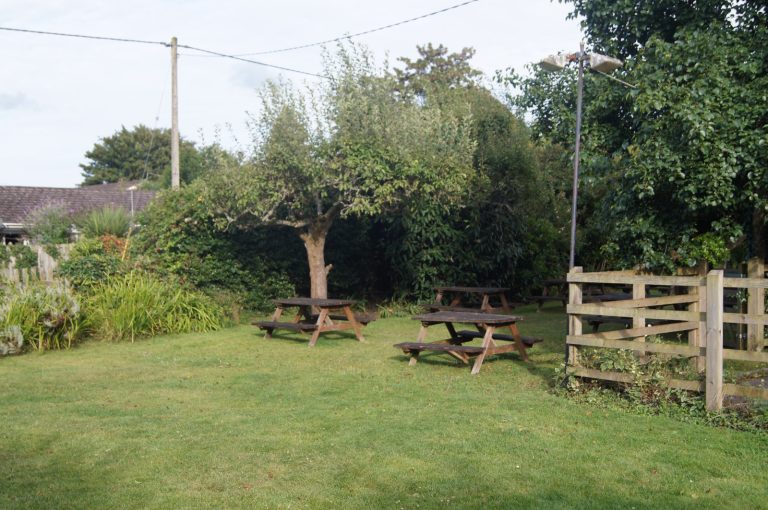
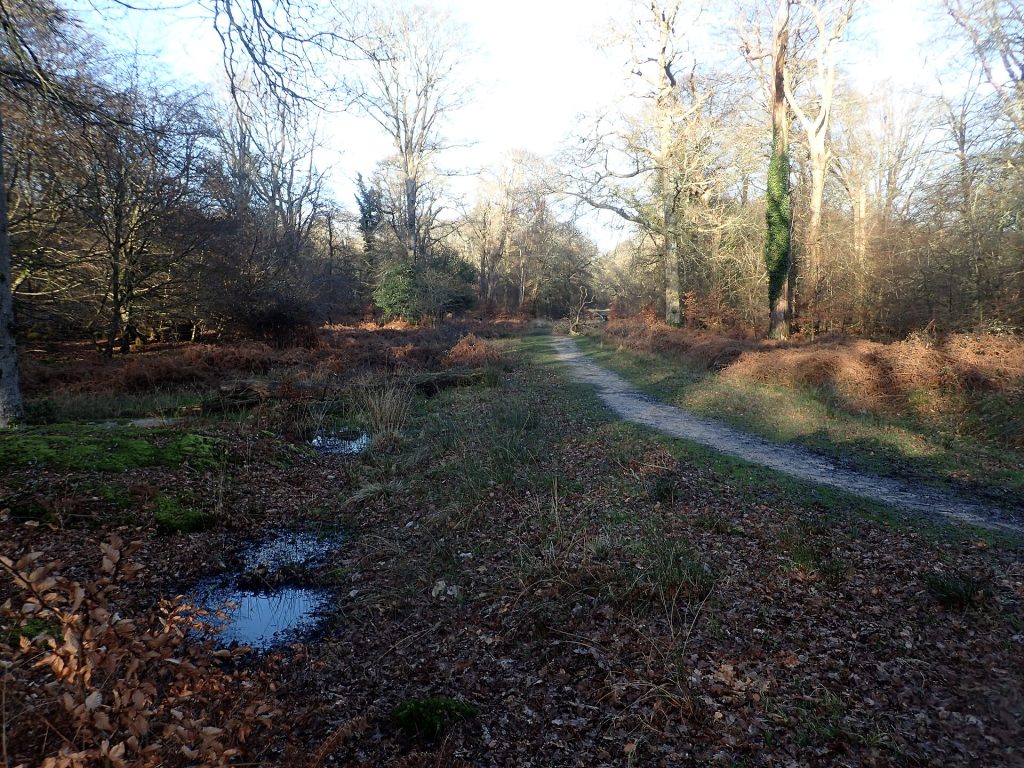
Few places in England make dog walks as easy as Lyndhurst. The open forest starts where the village ends, so from the High Street you can be out on the heath at Bolton’s Bench in ten minutes, with big woods, streams and gravel tracks a short drive beyond. This is a working forest, though. Ponies, cattle and donkeys roam free, rare birds nest on the ground, and in summer the bracken holds ticks, so the rules further down this page matter as much as the routes.
Below are the routes we recommend for dogs, starting with the nearest. After them come the New Forest’s dog walking rules in plain English, the practical hazards, and where to get a drink afterwards.
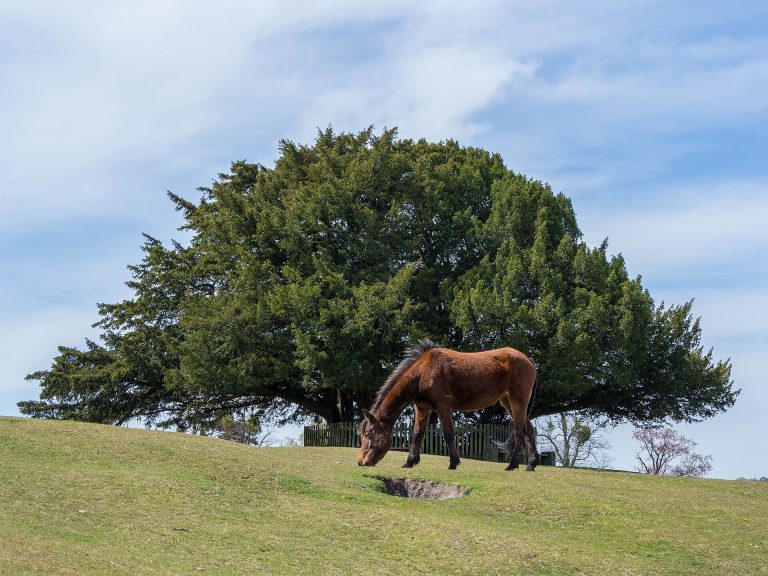
Bolton's Bench and White Moor
A short heathland loop from the edge of Lyndhurst, over the yew-topped hill of Bolton's Bench and out across the open heath of White Moor.
- Dogs welcome
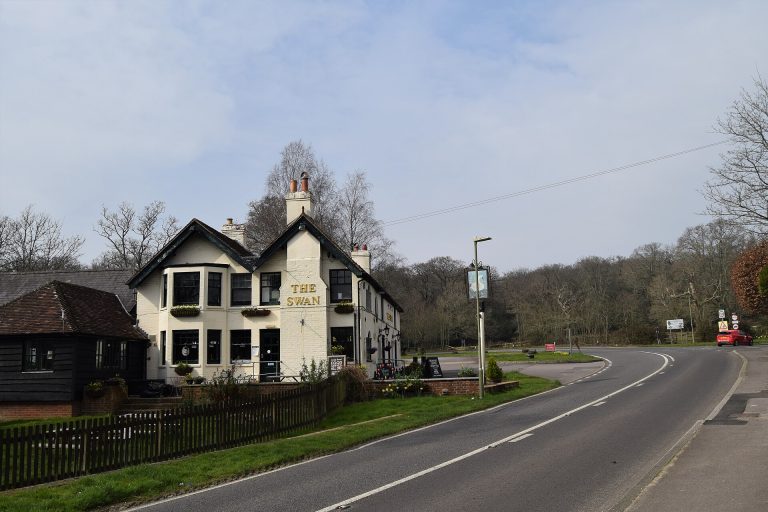
Lyndhurst to Emery Down and Swan Green
A gentle 2.8 mile loop from Lyndhurst to the thatched cottages of Swan Green and the pub at Emery Down, on quiet lanes and forest tracks.
- Dogs welcome
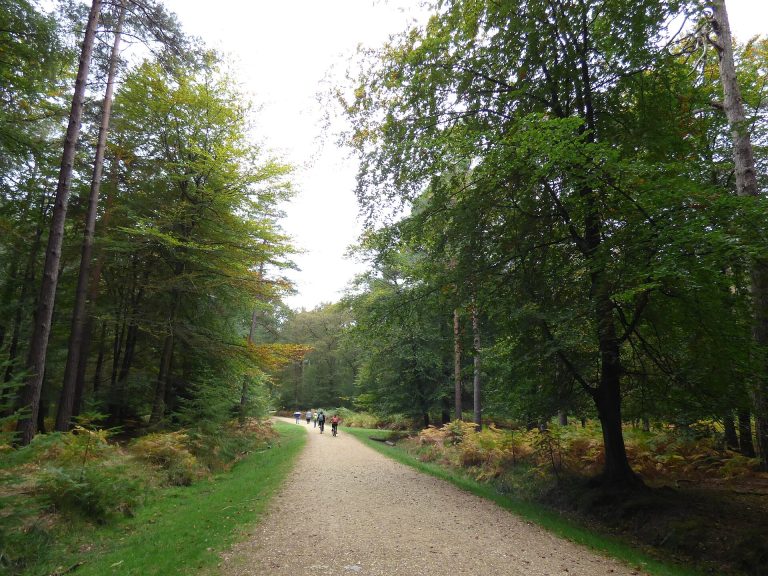
Bolderwood Walks and the Ornamental Drive
Three waymarked loops of half a mile to 2 miles from Bolderwood car park, through old beech and Victorian conifers, with honest advice on spotting deer.
- Dogs welcome
- Buggy friendly
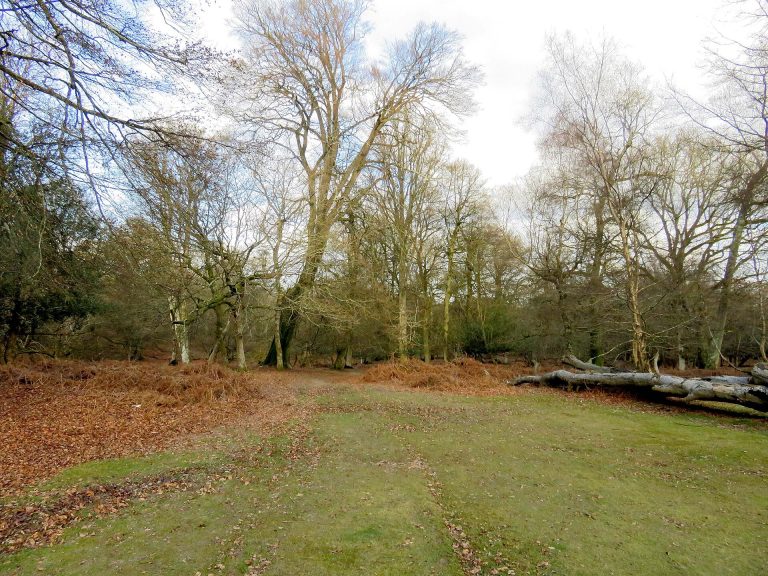
Mark Ash Wood from Bolderwood
An unwaymarked 2.5 mile loop from Bolderwood into the New Forest's great beechwood, among ancient pollards, old oaks and holly. Best in late October.
- Dogs welcome
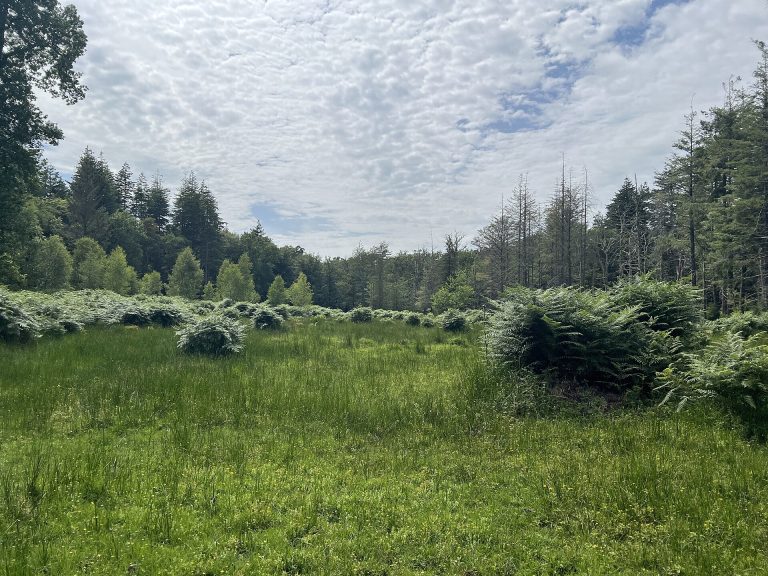
Knightwood Oak and Holidays Hill
A 3 mile woodland walk from the Knightwood Oak, the New Forest's biggest oak, past Monarchs Grove and through Holidays Hill Inclosure to the Old Reptiliary.
- Dogs welcome
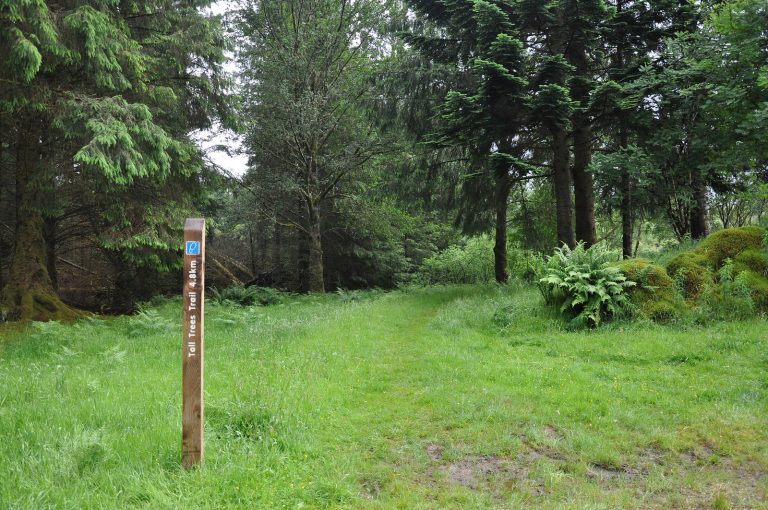
Rhinefield Ornamental Drive and Tall Trees Trail
A level, waymarked 1.5 mile loop on smooth gravel beneath giant redwoods and Victorian Douglas firs, and the most accessible walk near Lyndhurst.
- Dogs welcome
- Buggy friendly
- Step-free
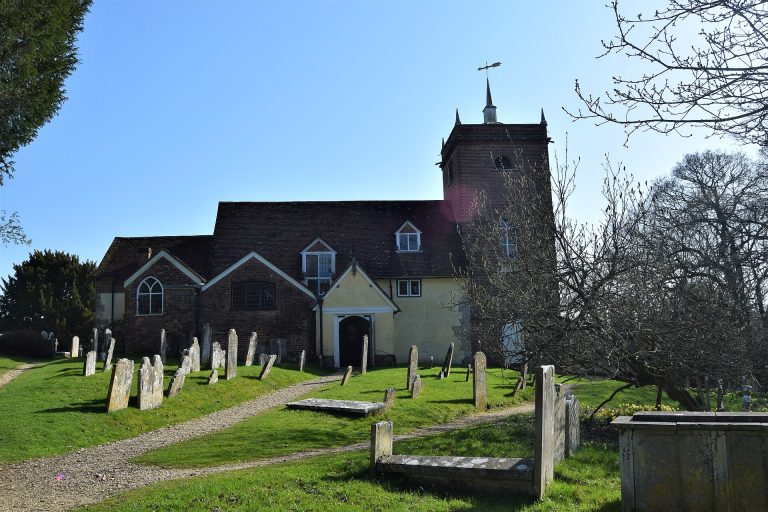
Minstead and the Rufus Stone
A 4.5 mile walk from Minstead's green and the Trusty Servant to Conan Doyle's grave and the Rufus Stone, where William II fell in 1100.
- Dogs welcome
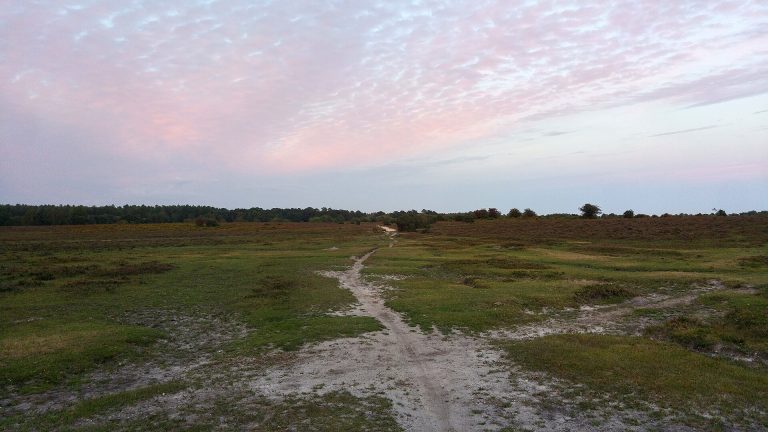
Matley Heath and Matley Wood
A short, wild loop off the Beaulieu road: twisted oaks in Matley Wood, open heath, and the alder-lined edge of Matley Bog. Boots essential.
- Dogs welcome
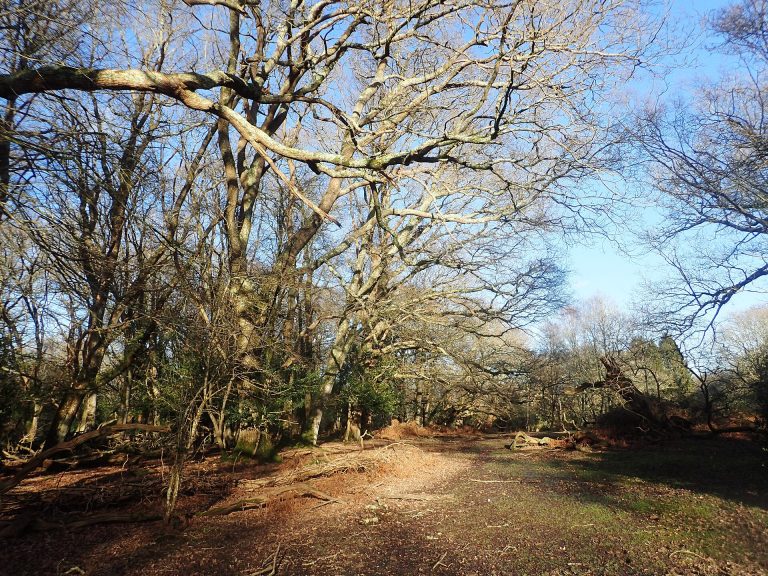
Lyndhurst to Brockenhurst through the Forest
A 5 mile linear walk from Lyndhurst through Bank and over Bolderford Bridge to Brockenhurst station, with the bus back and dog-friendly pubs at both ends.
- Dogs welcome
The best dog walks near Lyndhurst
| Walk | Distance | Water for dogs | Best for |
|---|---|---|---|
| Bolton’s Bench and White Moor | 2.2 miles | None, carry some | A quick walk from the village |
| Emery Down and Swan Green | 2.8 miles | None, carry some | A pub stop halfway |
| Knightwood Oak and Holidays Hill | 3 miles | Stream in the valley | Shade and old trees |
| Bolderwood walks | 0.5 to 2 miles | Bratley Water | Gravel paths in winter |
| Mark Ash Wood | 2.5 miles | Small brooks, unreliable | Nesting season, autumn |
| Tall Trees Trail | 1.5 miles | None, carry some | Older dogs, level ground |
| Matley Heath and Matley Wood | 2 miles | Plenty of streams | Wild, muddy rambles |
| Minstead and the Rufus Stone | 4.5 miles | None, carry some | History and a pub lunch |
| Lyndhurst to Brockenhurst | 5 miles one way | Lymington River | A long day out |
From the village: Bolton’s Bench and Emery Down
Bolton’s Bench is the hill with the yew trees at the eastern end of the village, and the loop over it and out across White Moor is the walk most Lyndhurst dogs know best. It is open heath with ponies and cattle on it, so keep your dog close. From 1 March until late August, stick to the main gravel track. On the other side of the village, the Emery Down and Swan Green loop follows lanes and forest tracks to the New Forest Inn, which welcomes dogs in its bar and restaurant. Ponies, donkeys and cattle roam around Swan Green and Emery Down, so keep your dog close as you pass them.
Woods for shade and nesting season: Knightwood, Bolderwood and Mark Ash
West of the village, the big woods along Bolderwood Ornamental Drive are the best choice for dogs on hot days and in nesting season, because they keep you off the heaths. The Knightwood Oak walk has a stream for a drink. At Bolderwood the three waymarked gravel loops stay fairly clean even in winter, and the red Radnor Trail drops down to Bratley Water. Fallow deer live in these woods, so keep dogs under close control. Next door, Mark Ash Wood is unwaymarked old beech forest, wonderful for a sniffing, pottering sort of dog, though you will need a map.
Level and easy: the Tall Trees Trail
For elderly dogs, puppies or owners with limited mobility, the Tall Trees Trail at Blackwater is a level gravel loop under giant redwoods. The path is shared with wheelchair users and small children, so keep your dog close or on a short lead.
Wild and wet: Matley Heath
Matley is the walk for dogs that love mud. It is a short loop of twisted oaks, heath and bog edge with plenty of streams. Keep dogs out of the bog itself, and remember that Matley Heath is prime nesting ground in spring and summer.
Longer days: Minstead and Brockenhurst
The Minstead walk ends at the Trusty Servant, where dogs are welcome in the bar, the restaurant and even the bedrooms. The linear walk to Brockenhurst crosses the Lymington River at Bolderford Bridge, a favourite paddling spot, and finishes near two dog-friendly places close to the station. Check the bus operator’s dog policy if you plan to ride back.
New Forest dog walking rules
The National Park Authority and Forestry England publish a Dog Walking Code. Most of it comes down to keeping your dog under effective control. If you cannot reliably call your dog back, keep it on a lead. Always use a lead in car parks and alongside roads, which are unfenced with a 40 mph limit and animals standing in them. If another dog coming towards you is on a lead, put yours on one too. Stop your dog jumping up at people, and take extra care around horse riders, cyclists, picnics and children. This is a working forest, so obey any signs about forestry work.
Ponies, cattle and donkeys
Every pony, cow and donkey you meet belongs to a commoner, and the animals are semi-wild. Never let a dog approach, bark at or chase them. Keep well away from mothers with young, because a mare with a foal or a cow with a calf will defend it. If cattle or ponies threaten or chase you, let go of the lead so that you and your dog can each get to safety separately. A dog can outrun a cow, and you cannot if you are attached to it. Feeding or petting ponies and donkeys is banned in much of the Forest under a council order, with fixed penalties of up to £100 or a fine of up to £1,000 on prosecution. The New Forest Code covers the rest, from litter to parking.
Ground-nesting birds: 1 March until late August
Curlew, lapwing, snipe, redshank, Dartford warblers, nightjars and woodlarks nest on the ground on the open heaths and boggy valleys. Forestry England’s season runs from 1 March until late August. During that time, keep yourself and your dog on the main gravel tracks across heathland and keep your dog with you, on a lead where needed. Stay out of any red-signed areas completely. If you see a bird circling and calling in alarm, move on quickly. Better still, choose a woodland walk for those months. Our page on ground-nesting birds explains why it matters so much here.
Deer and fawns
Never let a dog chase deer. In early summer, does leave their fawns lying still in the bracken. If your dog finds one, call it away and leave the fawn alone, because your scent or your dog’s can stop the mother returning.
Water, ticks, adders, bins and hot cars
- Water: many walks have no reliable stream, especially on the heaths, so carry water and a bowl. Keep dogs out of bogs and stagnant pools.
- Ticks: they are most common in late spring and summer and can carry Lyme disease. Check your dog, and yourself, after any walk through bracken or long grass, and carry a tick remover.
- Adders: Britain’s only venomous snake lives on the heaths and only bites when disturbed. Keep dogs on the paths on warm days. If your dog is bitten, keep it calm, carry it if you can and go straight to a vet.
- Bins: always pick up. Not every car park has a bin, so be ready to take bagged waste home, as the New Forest Code asks. Never leave a bag hanging on a tree.
- Hot cars: never leave a dog in a parked car on a warm day, even in the shade with the windows open. Forest car parks are often in full sun, and cars heat up far faster than people expect.
Parking for dog walkers
Every Forestry England car park in the New Forest has charged since 20 April 2026, including Bolton’s Bench, Bolderwood, Blackwater, Knightwood Oak and Matley. At the time of writing it costs £1.50 for an hour, £3 for two, £5 for four and £8 for longer, paid through RingGo or at card machines in 16 car parks. One ticket covers any Forestry England car park in the New Forest as long as it covers your total stay, so buy enough time for both walks and you won’t pay twice. There is a 15 minute grace period, blue badge holders also pay, and Forestry England members park free. Lyndhurst’s main village car park is run by the district council and charges differently. Our parking guide has the details.
Professional dog walkers
Anyone walking dogs for money in the New Forest is asked to sign the National Park Authority’s Professional Dog Walkers’ Charter. If you hire a walker while you are staying, check that they have signed it. The Authority’s website has a list.
Where to get a drink afterwards
Lyndhurst does dog-friendly pubs well. The Fox & Hounds on the High Street says it is dog friendly, and the New Forest Inn at Emery Down has a back gate straight onto the forest and welcomes dogs in its bar and restaurant. Further out, the Trusty Servant at Minstead and the Oak Inn at Bank both welcome dogs, and in Brockenhurst the Snakecatcher and Esme’s Tea Rooms are close to the station. For the full list, with where dogs are allowed in each building, see where to eat with your dog.
Frequently asked questions
Can dogs be off the lead in the New Forest?
Yes, across most of the open forest, as long as your dog is under effective control and comes back when called. Use a lead in car parks, near roads and around livestock. On heathland during the nesting season, keep your dog on the main tracks.
When is the ground-nesting season?
From 1 March until late August. Keep to the main gravel tracks across heaths and stay out of red-signed areas.
What should I do if cattle come towards me with my dog?
Keep calm, move away steadily and, if they keep coming, let go of the lead so you can both get away separately.
Which walk is best for a dog on a hot day?
A shady woodland walk with water, such as Knightwood Oak and Holidays Hill or the Radnor Trail at Bolderwood, ideally early in the morning.
Are there dog bins on New Forest walks?
Some car parks and villages have them, but many walks have none. Carry bags and be prepared to take waste home.