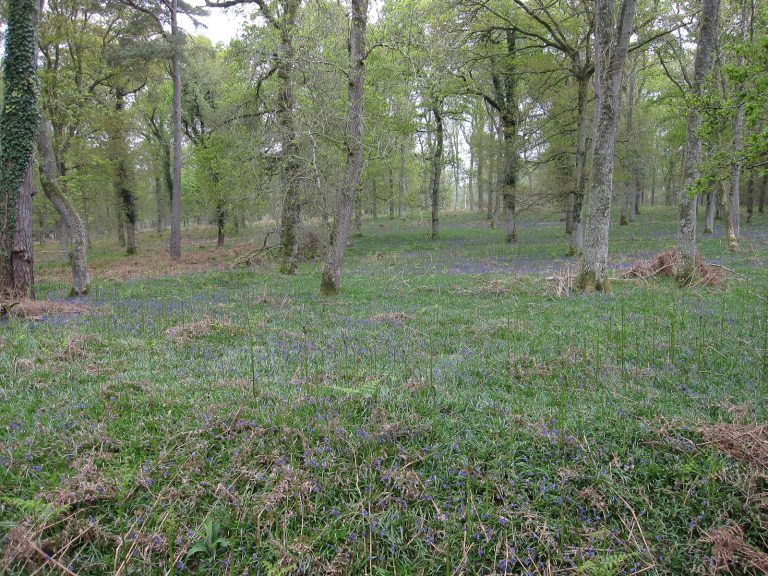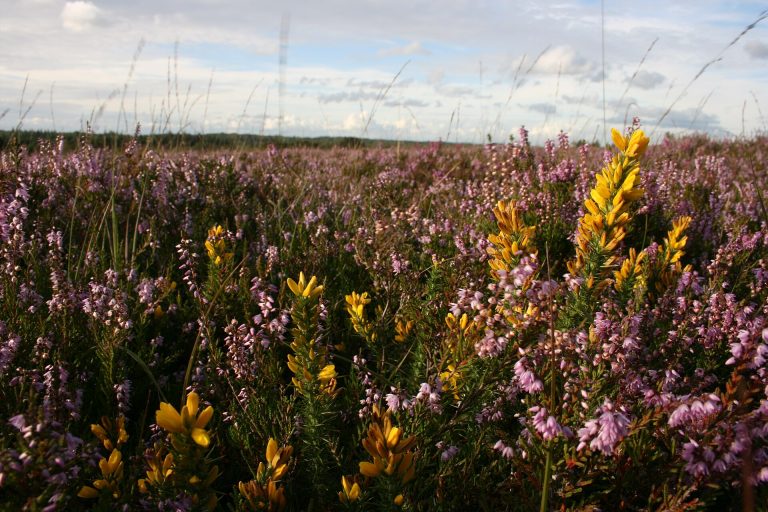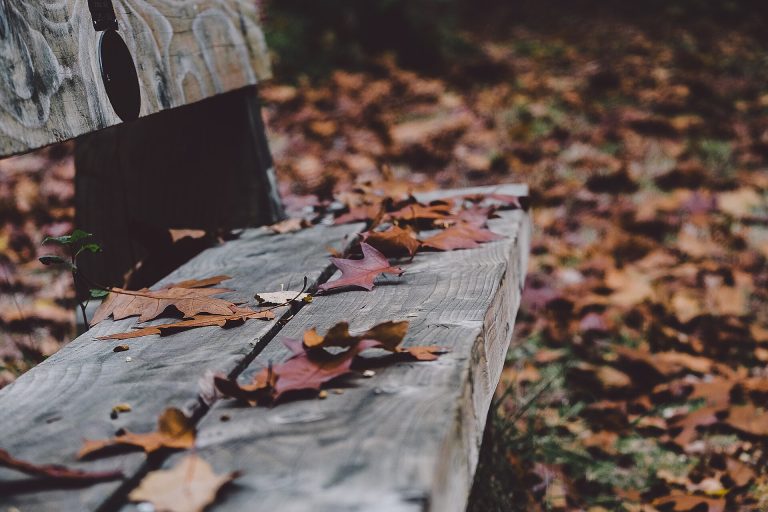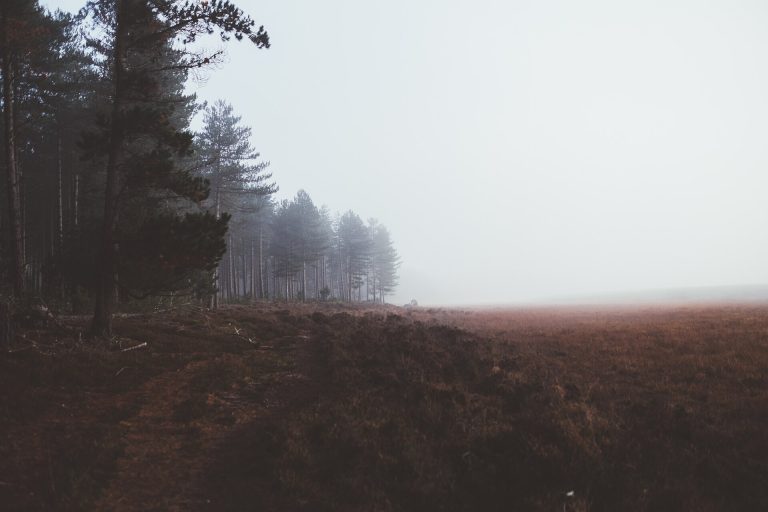
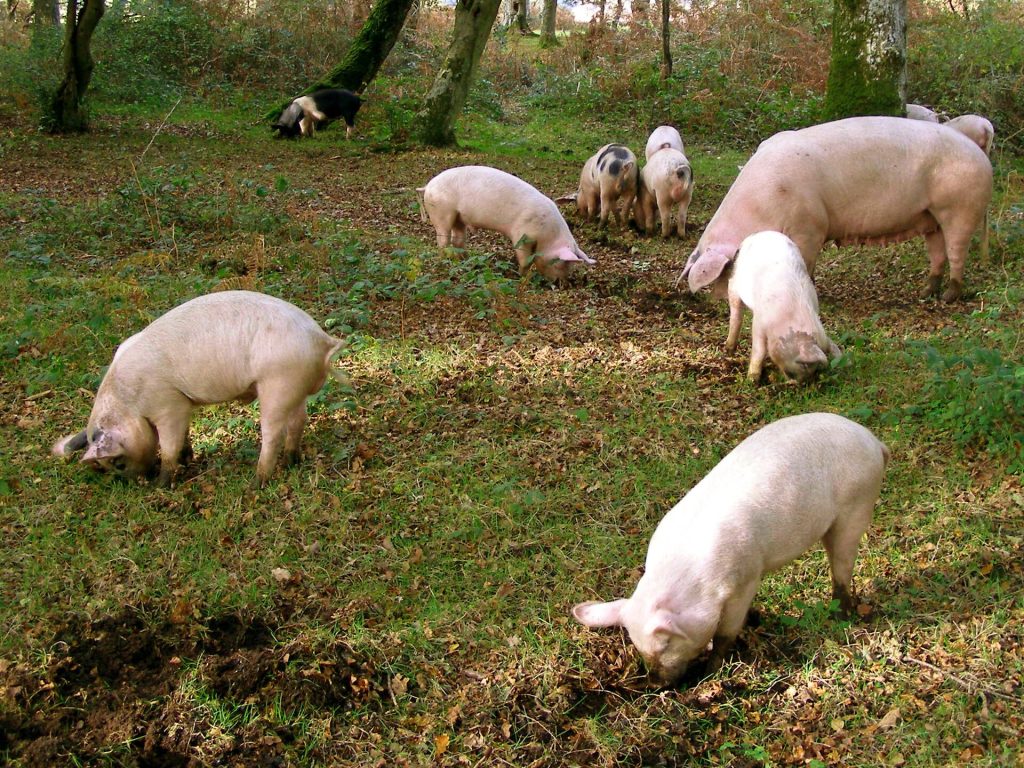
Every autumn a few hundred pigs are let loose in the New Forest to hoover up the acorns. This is pannage, one of the commoners’ ancient rights. For a couple of months you can round a bend near Lyndhurst and find a sow and her half-grown litter grunting their way along the verge under an oak. The 2026 pannage season runs from Monday 14 September to Sunday 29 November 2026, as agreed by Forestry England and the Verderers.
The pigs are not there for show. They do a real job, and once you know what it is you will look at an oak tree in October rather differently.
What is pannage?
Pannage is the right to turn pigs out onto the Forest in autumn to eat fallen acorns, beech mast, chestnuts and anything else they can find. Its formal name is the common of mast. Like the other common rights it belongs to a property rather than a person, so a cottage or smallholding that carries the right passes it on to whoever owns or rents the land.
It is a very old practice. The Domesday Book of 1086 often measured woodland by the number of pigs it could feed, and in the Middle Ages turning pigs into the woods in autumn was normal across England. The New Forest is now the only place in the country where it still happens on any real scale. In the 19th century as many as 6,000 pigs went out each autumn. Over the last ten years the Verderers’ counts have ranged from about 380 to just over 700 (643 in 2025), because far fewer commoners keep pigs.
Pannage sits alongside the other New Forest rights of common: pasture (grazing ponies, cattle and donkeys), estovers (an allowance of firewood) and two that are no longer used, marl (digging clay to improve farmland) and turbary (cutting peat turves to burn). Our page on New Forest ponies and commoning explains how the whole system works.
Why acorns matter so much for ponies and cattle
Green acorns are poisonous to ponies and cattle in large amounts. They contain tannins that damage the gut and kidneys, and an animal that gorges on them can bleed internally and die. A few ponies and cattle on the Forest are lost this way every year, and the worst years are mast years, when the oaks drop a huge crop all at once.
Pigs can eat acorns without any harm, and they eat a lot of them. Turning them out clears the ground under the oaks before the ponies get stuck in. Commoners also take many of their cattle off the Forest in autumn to keep them away from the acorns. So the pigs are a practical piece of animal welfare that happens to have lasted a thousand years.
The pigs earn their keep in other ways too. Their rooting turns over and airs the soil and pulls up some weeds. They wear rings in their noses, which lets them snuffle along the surface but stops them ploughing up the grass, and each one carries an identity tag in its ear.
When is pannage season? The 2026 dates
There is no fixed date. Forestry England and the Verderers agree the season each year according to when the acorns start to fall, and it lasts at least 60 days. If there are still plenty of acorns on the ground near the end, it can be extended.
| Season | Start | End |
|---|---|---|
| 2026 | Monday 14 September | Sunday 29 November, unless extended |
| 2025 | Monday 15 September | Extended to 4 January 2026 after a very heavy acorn crop |
| 2024 | 16 September | 22 November |
The 2026 dates come from the Verderers’ pannage notice, published in September 2026. If the season is extended, the Verderers announce it on their website.
Commoners can’t simply open the gate on the first morning, either. Each pig has to be ringed and then inspected and marked by an Agister, one of the Verderers’ field officers, at least 14 days before it goes out, and the owner pays a small fee per pig.
Pigs outside the pannage season
Seeing a pig in May doesn’t mean someone has got the dates wrong. By custom, a breeding sow, known as a privileged sow, may be on the Forest outside pannage as long as she goes back to her owner’s holding at night and doesn’t cause trouble. These are the only pigs you should see out between seasons.
Where to see pannage pigs near Lyndhurst
Commoners turn their pigs out close to home, so the pigs gather around the villages where commoners live and the oak and beech woods nearby. You won’t find them spread evenly across the Forest. Bramshaw, in the north of the Forest, and the woods around Bolderwood are two of the places most often suggested for pig-spotting. Many pigs also go home at night, so daytime is your best chance.
The easiest way to find them is to slow down. Walk or cycle the lanes that run between the villages and the open Forest, look under the big oaks along the roadside and on the edges of the lawns, and listen. A group of pigs working through leaf litter makes a steady crunching and snorting that carries a surprising distance. A couple of good autumn walks among oaks and beeches from our walks section are Minstead and the Rufus Stone and the Bolderwood trails.
How to behave around the pigs
New Forest pigs are used to people, and that is exactly why they can be a nuisance. They are working animals owned by commoners, not a petting farm.
- Watch from a few metres away and let them get on with eating. Pigs can bite, and a sow with piglets will protect them.
- Never feed them. Feeding pigs, or any livestock, kitchen scraps or catering waste is illegal because of the risk of African swine fever and foot and mouth disease. Bread, sandwiches and apple cores all count.
- Don’t touch or try to pick up piglets, however tame they look.
- Keep dogs on a lead near pigs and well clear of sows with young.
- Take all your food waste home, and never leave Halloween pumpkins on the Forest.
The general rules for all the Forest animals are on our New Forest Code page.
Pannage pork
Traditionally the pigs were fattened on the Forest and then slaughtered and salted down for winter, and pannage pork is still prized for its nutty flavour and dark meat. New Forest Pannage Ham now has protected geographical status in the UK, which means it must come from pigs turned out during the season set by the Verderers. If you want to try some, look for local producers through the New Forest Marque.
Frequently asked questions
When is pannage season in 2026?
From Monday 14 September to Sunday 29 November 2026, unless Forestry England and the Verderers agree an extension.
How many pigs are turned out for pannage?
Between about 380 and 710 a year over the last decade, with 643 in 2025, depending on how many commoners decide to turn pigs out. In the 19th century it could reach 6,000.
Why do New Forest pigs have rings in their noses?
The rings let pigs pick food off the surface but make deep rooting uncomfortable, so they can’t tear up the grazing that the ponies and cattle rely on.
Can pannage be extended?
Yes. If plenty of acorns are still on the ground, Forestry England and the Verderers can agree a longer season. After a huge acorn crop in 2025, that season ran until 4 January 2026.
Pannage is one part of the Forest year. See the New Forest through the seasons for the rest.